Trésor-Eco
The New EU Fiscal Framework: From Negotiation to Implementation
The new EU fiscal governance rules entered into force in April 2024, the product of negotiations started in 2022. Member States are now committed to adhering to a multiannual fiscal path set in “medium-term fiscal-structural plans” (MTFSPs), complying with the requirements from a sustainability analysis of their debt, as well as a reform and investment programme.
In April 2024, the new EU economic governance framework entered into force, the result of negotiations between the 27 EU Member States, the European Commission and the European Parliament that began back in 2022. This revised version of the Stability and Growth Pact (SGP) was intended to rectify the shortcomings of the previous framework namely its excessive inflexibility, doubts about its credibility after the sovereign debt crisis and then the COVID-19 pandemic, and its lack of investment incentives and structural reforms.
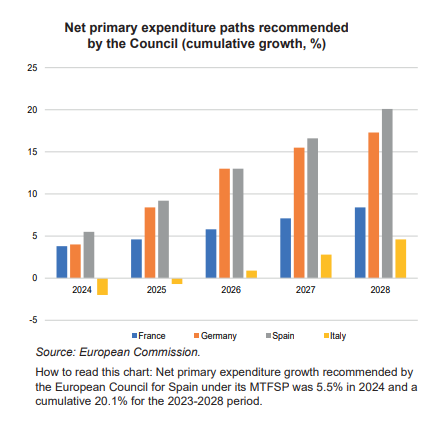
Under this new framework, Member States commit to a multiannual fiscal path (see chart below) – complying with the requirements identified in a debt sustainability analysis – and to a set of reforms and investments.
The commitments are now set out as part of the national medium-term fiscal-structural plan (MTFSP), and their implementation is reported on annually and monitored as part of preparing annual progress reports. If this path, which is based on a new single indicator – net primary expenditure – is not adhered to, or the ratio of government deficit to GDP exceeds the reference value of 3%, an excessive deficit procedure may be initiated.
As the deteriorated geopolitical landscape has prompted Europeans to raise their national defence spending, the Commission has, since the first year of implementing these new rules, offered Member States the possibility to use national escape clauses to derogate from the Stability and Growth Pact if they so wish.